What a yahrzeit record holds
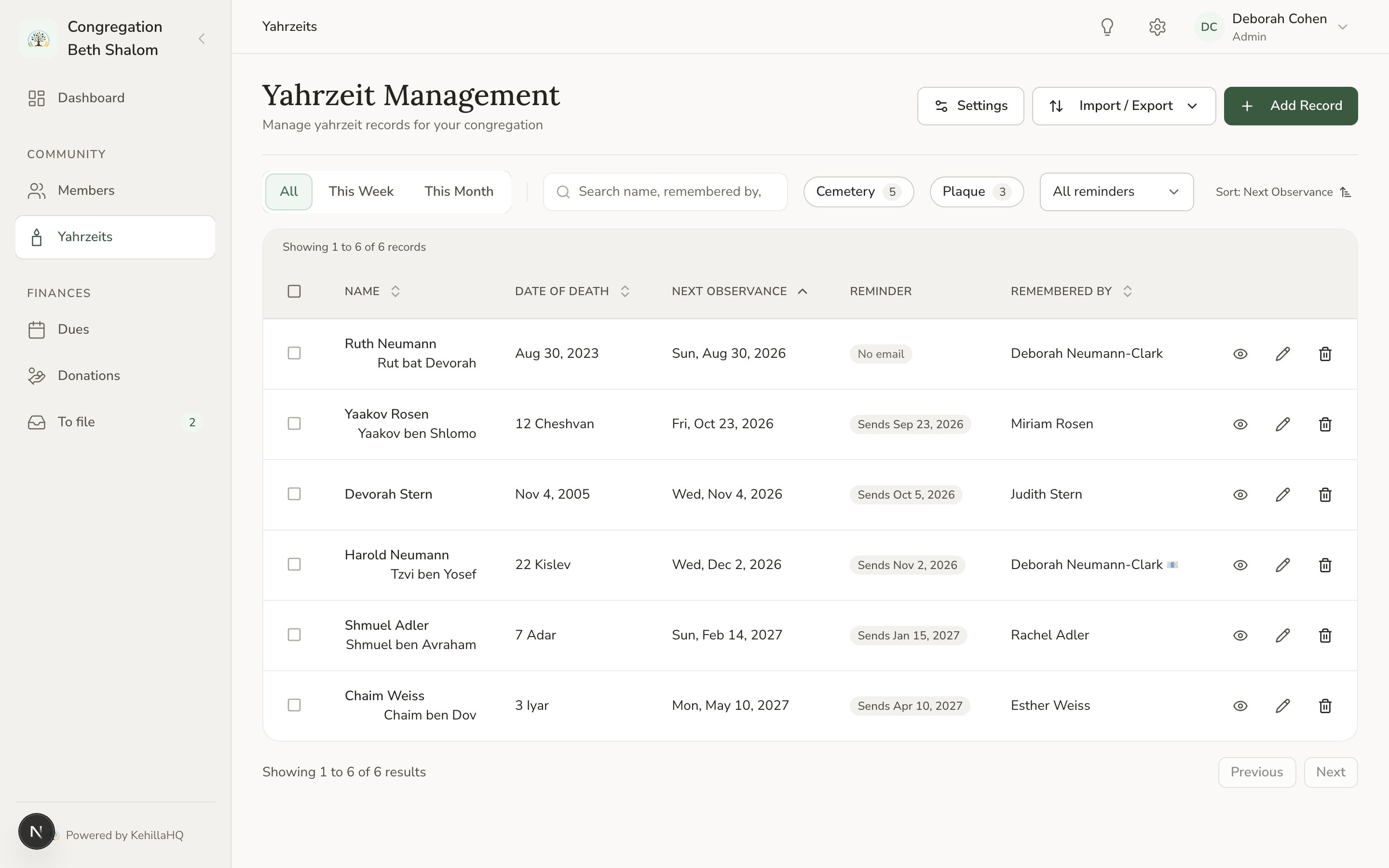
Who is being remembered. Their name and Hebrew name, and their relationship to the family, for example Mother or Grandfather. When they died. Either as a Hebrew date or a secular one. Which you choose changes how the anniversary recurs, so it matters. See Hebrew and secular dates. Who is remembering them. Usually a member of your congregation. It can also be someone who is not a member at all, entered directly on the record with their name and email. Cemetery and plaque. Whether they are buried in a cemetery your community tracks, and whether there is a memorial plaque in the building. See Cemetery and plaque records. Notes. Anything else your office needs to remember.What the module does for you
It works out this year’s date. For Hebrew-calendar yahrzeits this is real work, because the secular date moves by about eleven days each year. You never have to calculate it. It sends reminders. Once you turn them on, reminder emails go out automatically before each observance. See Reminder emails. It records what happened. Every reminder attempt is logged, whether it was sent, skipped, or failed. So when a family asks whether they were notified, you can answer with certainty. See Checking whether a reminder went out.Before your first reminder goes out
Reminders are off until you switch them on, which gives you room to get the records right first.1
Get the records in
Add them by hand, or import your existing list. See Importing yahrzeits.
2
Check the dates and the calendar choice
Confirm that records meant to follow the Hebrew calendar are set that way. This is the most common thing to get wrong at the start.
3
Check who receives each one
A record with no reachable email address cannot send. Find these before your families do.
4
Set your defaults
Observance timing, how far ahead reminders go, and the name and reply-to address on the emails. See Yahrzeit settings.
5
Turn reminders on
From Settings, then Yahrzeit.